How to Choose a Patient Monitor for Your Clinic or Hospital
A patient monitor is one of the most important purchases a facility makes. Learn which parameters you need, how to match a monitor to your ward, and what to ask a supplier before you buy.
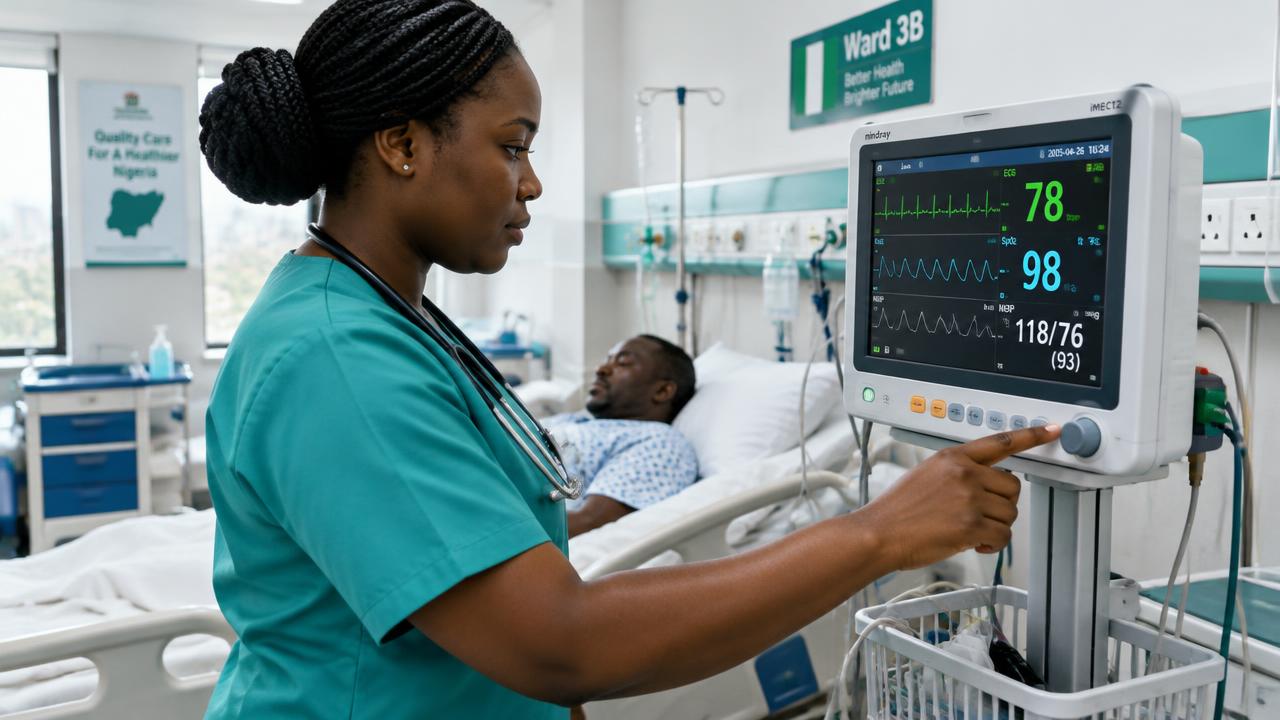
A patient monitor is the bedside device that tracks a patient's vital signs and alerts staff when something changes. Choose well, and your team catches deterioration early. Choose badly, and you end up with false alarms, missing accessories, or a machine that sits unused because it doesn't fit how your ward works.
This guide walks through what to look at before you buy.
Step 1: Start with who you will monitor
The right monitor depends on your patients, not on the longest feature list.
| Setting | Typical need |
|---|---|
| Outpatient clinic, observation room | Basic spot-check or bedside monitor: ECG, SpO2, blood pressure, temperature |
| General ward, post-operative recovery | Multi-parameter monitor with reliable alarms and good battery life |
| ICU, HDU, theatre | Advanced monitor with invasive blood pressure, EtCO2, and a central station |
| Neonatal and paediatric units | Monitor with dedicated neonatal and paediatric modes, plus correctly sized cuffs and probes |
Also decide whether you need to monitor one patient at a time or many at once. That decides whether you need a central monitoring station.
Step 2: Know the core parameters
Most multi-parameter monitors cover these:
- ECG — heart rate and rhythm
- SpO2 — oxygen saturation, measured with a finger or ear probe
- NIBP — non-invasive blood pressure, measured with a cuff
- Temperature
- Respiration rate
Higher-acuity areas often add invasive blood pressure (IBP) and EtCO2 (end-tidal carbon dioxide). Don't pay for parameters your facility will never use. But if you expect to grow into critical care, check that the monitor can add modules later.
Step 3: Check the features that affect daily use
- Screen size and readability — staff should read values from across the bed, in bright and dim rooms
- Alarm quality — look for clear audible and visual alarms with adjustable limits. Poorly set alarms cause alarm fatigue, where staff start ignoring them
- Patient modes — confirm adult, paediatric, and neonatal settings if you treat all three
- Portability and battery — ask for the actual battery runtime in hours, and whether the battery is easy to replace. This matters a lot where power is unreliable
- Data and connectivity — trend storage, printing, and the option to connect to a central station or hospital system
- Ease of cleaning — a smooth casing and sealed ports make infection control simpler
Step 4: Plan for power
In many Nigerian facilities, power is the hidden risk. A good monitor on a bad supply fails early. Before you buy, ask:
- Does the monitor run on mains and battery, and how long does the battery last?
- Does it tolerate voltage fluctuations, or do you need a stabiliser or UPS?
- Can your backup power (generator, inverter, or solar) support it?
Step 5: Count the accessories and running costs
The price of the monitor is only part of the cost. Ask for a full list of what is included and what you will have to replace:
- SpO2 probes (reusable or disposable, sized for adults, children, and infants)
- ECG cables and electrodes
- NIBP cuffs in several sizes, and tubing
- Temperature probes
- Printer paper, if the monitor prints
Confirm that these accessories are available locally and that you aren't locked into a single supplier. A monitor without affordable spares becomes expensive quickly.
Step 6: Verify the supplier, not just the machine
Ask the supplier:
- Is the device new, used, or refurbished? Get this in writing.
- Does it carry recognised safety and quality certification (such as CE marking or FDA clearance), and what documents come with it? Confirm current local regulatory requirements with NAFDAC.
- What does the warranty cover, and for how long?
- Who installs the monitor and trains your staff?
- Is there local after-sales service, and how fast do they respond?
- Are spare parts and accessories kept in stock?
A supplier who answers these clearly is usually a safer choice than one who only offers a low price.
Common buying mistakes
- Buying the most advanced model when basic monitoring is enough
- Ignoring accessory and replacement costs
- Skipping staff training, so features go unused
- Not checking battery life and power compatibility
- Choosing a supplier with no local service
Look after it once you have it
A good monitor stays accurate only if it's maintained. Cleaning schedules, cable care, and regular calibration all extend its life. Read our guide on how to maintain your patient monitors for longer life.
Need help choosing?
DAFFSER Medicals Equipment Ltd supplies medical equipment for hospitals, clinics, and care facilities across Nigeria and Africa. Tell us about your facility and your budget, and we'll recommend a monitor that fits. Browse our products or contact us for a quote.
Need help choosing a patient monitor?
DAFFSER Medicals Equipment Ltd supplies medical equipment for hospitals, clinics, and care facilities across Nigeria and Africa. Tell us about your facility and your budget, and we'll recommend a monitor that fits.
Browse Patient Monitors